
 By
By 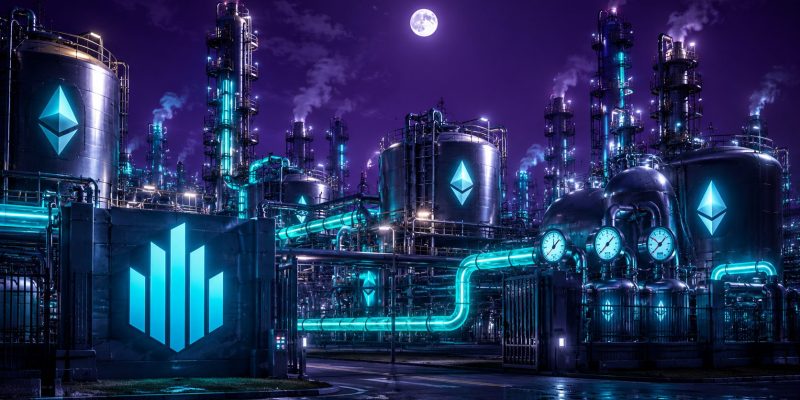
ETHGas has had a volatile few weeks that capture the tension between a genuinely differentiated infrastructure narrative and the brutal reality of a small-cap token trading in a fearful market. GWEI shot up 42% to $0.1904 on June 29, drawing widespread attention before pulling back sharply. The token is now trading around $0.027 with a market cap of approximately $55.7 million, ranked #401 on CoinGecko — down 10.10% over the past seven days and underperforming the broader crypto market over the same period.
Analysis from July 1 noted GWEI retesting the crucial $0.10 support zone after breaking away from a multi-month base in April 2026, with the four-hour chart showing a bearish short-term structure below all major EMAs while the daily trend remained intact above $0.10. That level has since given way, placing GWEI in a more precarious technical position heading into the final week of July.
What ETHGas Actually Does
The confusion around ETHGas starts with its name. This isn’t a tool for monitoring gas prices — it’s a full-stack Ethereum infrastructure ecosystem built around gas optimization, with GWEI as its native token. The platform provides a suite of tools targeting Ethereum’s most persistent pain points: gas cost management, transaction execution efficiency, and MEV protection.
The core product set includes a gas price oracle providing real-time fee recommendations across Ethereum and L2 networks, a transaction acceleration service that repositions stuck transactions without user intervention, and a private mempool relay that shields transactions from MEV bots before inclusion in a block. That MEV protection component positions ETHGas directly in the same space as Flashbots — but with a token-based economic model that captures value for GWEI holders rather than keeping revenue within a foundation structure.
The veGWEI governance model adds a vote-escrowed staking layer — holders lock GWEI to receive veGWEI, which grants both governance rights and a proportional share of protocol fee revenue. That fee-sharing design creates a direct link between platform usage and token value accrual, giving long-term holders a financial incentive that goes beyond price speculation alone.
The Infrastructure Narrative Transition
A deep-dive analysis argues GWEI is transitioning from a narrative token to a vital Ethereum infrastructure play. That transition is the most important development in ETHGas’s story right now — not the price action, but the argument that what the platform delivers is infrastructure-grade rather than speculative-grade.
The distinction matters for how institutional capital evaluates the project. Infrastructure tokens — oracles, bridges, data availability layers — trade at different valuation multiples than narrative tokens precisely because their demand is tied to actual usage rather than sentiment cycles. If ETHGas can demonstrate that GWEI is required for meaningful Ethereum transaction volume, the addressable market expands considerably beyond the crypto-native trader audience currently driving most of its volume.
Whale activity has been notably positive — large holders actively buying GWEI while retail sentiment remains bearish — a divergence that sometimes precedes sustained price recovery when institutional conviction exceeds retail skepticism. The $0.135 resistance level is where that divergence will be tested most concretely.
The Supply Picture Heading Into Q3
ETHGas has a circulating supply of 2.1 billion GWEI against a maximum of 10 billion tokens — meaning only 21% of total supply is currently in market circulation. With a fully diluted valuation of $265 million against a circulating market cap of $55.7 million, the FDV-to-market-cap ratio implies significant future dilution from team, ecosystem, and investor unlocks over the coming years.
That supply overhang is the most significant structural headwind for GWEI beyond the near-term technical weakness. The infrastructure narrative needs to generate enough fee revenue and genuine usage to create demand that absorbs incoming supply — a challenge that most infrastructure tokens at this stage of development face before the protocol reaches the adoption threshold where burns and revenue distributions become meaningful.
The $0.10 level that previously served as support is now the level to reclaim. A sustained move back above it with increasing volume would reassert the April breakout narrative and give the infrastructure thesis its best chance of attracting the institutional capital that whale accumulation suggests is already beginning to position.






Comments