
 By
By 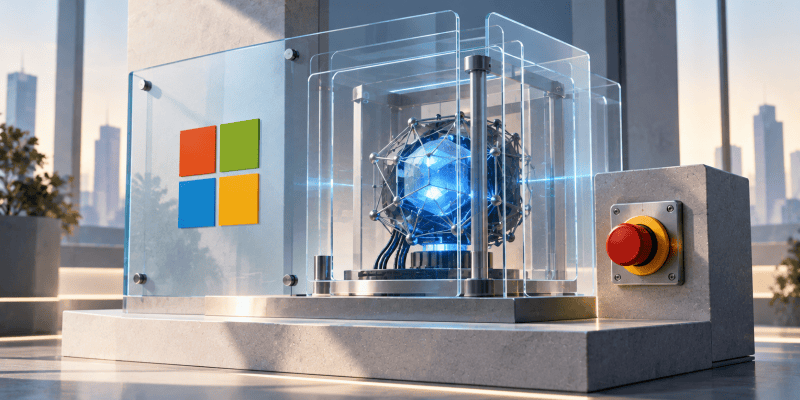
LONDON, United Kingdom
Microsoft has called for stronger legal safeguards governing artificial intelligence, adding to pressure on technology companies and governments to establish clearer rules for increasingly capable AI systems.
Microsoft President Brad Smith argued on October 12, 2026, that AI remains subject to less comprehensive safety regulation than many everyday products. He called for measures that would make developers more accountable when their systems cause harm, including clearer responsibilities and mechanisms to intervene when automated systems behave unpredictably.
The comments come as governments reassess how existing laws apply to AI tools that can make decisions, interact with digital services and perform complex tasks with limited human supervision.
Technology Firms Face Growing Accountability Questions
AI development has accelerated across consumer software, business applications and automated agents. Companies are introducing systems that can write code, analyse information, operate tools and complete multistep workflows.
These capabilities offer opportunities to improve productivity, but they also create risks when systems produce incorrect information, take unintended actions or access sensitive resources. As AI becomes more integrated into everyday operations, regulators are increasingly examining how responsibility should be assigned when something goes wrong.
Smith has advocated stronger safeguards, including mechanisms that allow dangerous systems to be stopped. Such controls could become particularly important for AI agents that operate across multiple applications or perform tasks without requiring approval at every step.
Regulators Consider Stronger Safety Requirements
The United Kingdom is considering tighter oversight of advanced AI, including proposals for compulsory reporting and monitoring of certain systems. Officials have discussed requirements that could give regulators greater visibility into significant incidents and enable specialist institutions to assess powerful models before or after deployment.
The debate reflects a wider challenge for policymakers. Rules must address genuine risks without preventing beneficial research or placing disproportionate burdens on smaller developers.
A central question is how to establish consistent safety standards while allowing companies to continue improving their products. Potential measures include incident reporting, independent testing, security evaluations and clear procedures for responding to harmful behaviour.
Implications for the Technology Industry
Stronger regulation could increase compliance costs for AI developers, particularly those building advanced models or deploying autonomous agents. Companies may need to invest more in testing, documentation, monitoring and incident response.
However, clearer rules could also provide businesses with greater confidence when adopting AI. Organisations operating in regulated industries often need evidence that their technology suppliers can manage security, privacy and operational risks.
For Microsoft and its competitors, the direction of AI policy could influence product design, enterprise contracts and the pace at which new capabilities reach customers.
Safety Becomes a Competitive Consideration
The discussion signals that AI competition is increasingly about more than model performance and computing capacity. Reliability, transparency and the ability to control automated systems are becoming important factors for customers and regulators.
The challenge for the industry will be to demonstrate that increasingly capable systems can be deployed responsibly. As governments consider new requirements, companies that establish robust safeguards may be better positioned to earn trust and support wider adoption.












Comments