
 By
By 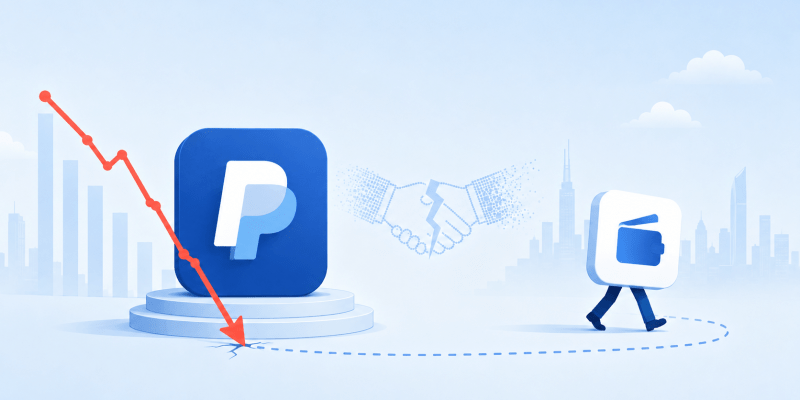
There is a certain symbolism in the deal that just fell apart. Stripe, the private upstart that has spent a decade eating the payments business PayPal once owned, teamed up with the buyout firm Advent to try to buy PayPal outright, for more than $50 billion. This week they walked away, unable to agree on price, and PayPal’s shares dropped around 13% the moment the news broke. The disruptor’s attempt to swallow the pioneer is off, for now, and the pioneer is worse off for it.
The offer on the table was $60.50 a share, valuing PayPal at roughly $53 billion, which would have ranked among the largest leveraged buyouts ever attempted. PayPal’s board considered it inadequate and, according to reports, was also weighing whether the financing was solid, how much regulatory trouble a payments mega-merger would draw, and how long the whole thing would take to close. The two sides never bridged the gap.
How far the crown jewel has fallen
To understand why $53 billion could be called “inadequate,” you have to remember where PayPal has been. At the height of the 2021 boom it was worth around $360 billion, the crown jewel of American fintech. The offer it just rejected was a fraction of that, roughly a seventh. The intervening years have been unkind: growth stalled, and Apple Pay, Google Pay, and Stripe itself steadily chipped away at the checkout business that still generates more than half of PayPal’s profit. A company that spent years as the default way to pay online became cheap enough to be a takeover target.
That context cuts both ways on the board’s decision. Turning down a premium bid is a defiant vote of confidence in PayPal’s turnaround under Enrique Lores, the former HP chief who took the top job in March. If he can reignite growth, holding out will look shrewd. If he cannot, shareholders who watched a $60.50 offer evaporate will not be forgiving, and analysts are openly skeptical that investors have the patience for yet another multi-year fix.
Why the stock fell so hard
The 13% drop is the market doing simple math. For weeks, PayPal’s shares had been floating on takeover hope, carrying a premium that assumed someone would pay up. Remove the buyer and you remove the floor, leaving the stock to settle back toward what the standalone business is really worth. The takeover was propping up the price; the collapse pulled the prop away.
None of this means PayPal is doomed. Venmo is growing nicely, its buy-now-pay-later volume is climbing, and Lores has a credible cost-cutting plan. It also does not mean the deal is dead forever, since the bidders could return, and other suitors, even Elon Musk’s X, have been floated. But standing alone, mid-turnaround, with a bruised share price is a harder place to operate from than being rescued at a premium.
So did PayPal’s board show backbone or stubbornness in rejecting $53 billion? The honest answer is that we will not know for a year or two, because it depends entirely on whether the turnaround works. What is clear today is that PayPal bet on itself, the market blinked, and the company now has to make good on a very expensive act of confidence. The pioneer got to stay independent. The bill for that independence just arrived.








Comments