
 By
By 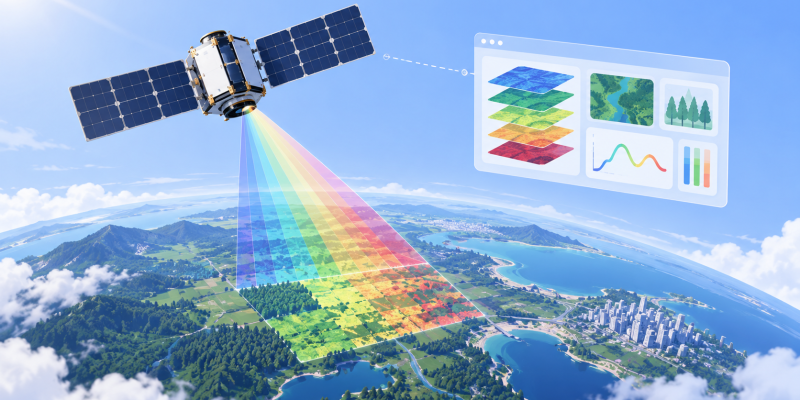
Indian space startups have had no shortage of grand visions lately, but Pixxel is one of the few that can point to hardware already circling the Earth. The Bengaluru company has raised $100 million in a Series C round co-led by Singapore’s state investor Temasek and the British space specialist Seraphim, the largest funding round any space-technology company has ever pulled off in India. The deal, which also drew returning backers and new names like 360 ONE Asset, takes Pixxel’s total funding to $195 million.
What sets Pixxel apart from the wave of pre-launch space hopefuls is how far along it is. Its business is hyperspectral imaging, satellites that split reflected light into many narrow bands to reveal things ordinary photos miss, from crop stress and mineral deposits to methane leaks and pollution. Six of its Firefly satellites are already in orbit, a constellation the company bills as the highest-resolution commercial hyperspectral fleet in the world. This is a company shipping a product, not just promising one.
Contracts, not just capital
The customer list is the more convincing signal. Pixxel has won contracts with NASA and the US National Reconnaissance Office, secured defence work through India’s iDEX programme, and been chosen to lead the country’s first public-private Earth-observation constellation of a dozen satellites. That mix of American civil, American intelligence, and Indian sovereign work is unusual for a startup this young, and it points to real demand from exactly the buyers who pay well: governments that increasingly want their own eyes in orbit rather than renting someone else’s. The new capital will fund a second constellation, called Honeybee, alongside high-resolution optical satellites and Aurora, the software layer that turns all that raw imagery into something a customer can actually use.
The harder road ahead
Here is the sober part. Earth observation is a capital-hungry, patient business, and building and launching satellites burns money faster than early revenue replaces it, which is precisely why a round this size is necessary. Hyperspectral data is powerful, but the commercial market for it is still maturing, and Pixxel has not disclosed how its individual deployments are performing financially. Impressive contracts and coverage do not automatically add up to a durable, profitable business at scale.
There is also a strategic stretch underway. Pixxel is expanding from being a focused hyperspectral specialist into a broader “planetary infrastructure” company spanning multiple satellite types and a software platform. That is a bigger, more valuable vision, and also a wider surface to execute across, with more ways to get spread thin. One footnote on the framing, too: Pixxel is often called “Google-backed,” which is accurate, but that stake dates to a smaller earlier round, not this one.
So is Pixxel India’s spacetech breakout, or a promising company taking on a great deal at once? On the evidence, the breakout case is strong. It has orbiting hardware, marquee government customers, and now the largest war chest in Indian space, at a moment when the country’s private space sector is genuinely taking off. The question is no longer whether Pixxel can build and launch, it has proven that, but whether it can turn a health monitor for the planet into a business that pays for itself. This $100 million buys it the runway to try.












Comments