
 By
By 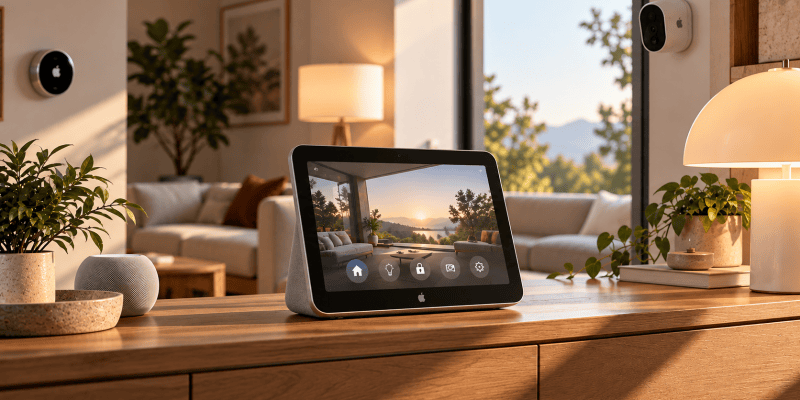
CUPERTINO, California, Apple has introduced HomeView, a new smart home device designed to combine household controls, entertainment and personal assistance through an upgraded version of Siri. The launch marks a renewed effort by the technology company to expand its presence in connected home hardware as competition intensifies among Apple, Google and Amazon.
Announced on October 13, 2026, HomeView features a seven inch display and is designed to sit on a tabletop or mount on a wall. The device starts at $299, with preorders opening immediately and availability scheduled to begin November 13.
The product represents Apple’s attempt to make its home ecosystem more useful by bringing multiple household functions into a single device rather than relying on separate speakers, displays and control applications.
Siri AI Becomes Central to the Experience
HomeView is powered by Apple Intelligence and a redesigned Siri assistant. The device is designed to recognise household members and personalise content, including supported messages, calendars, reminders and other information when paired with a compatible Apple device.
Users can also control supported smart home accessories through voice commands or the touchscreen. These functions include adjusting lighting and thermostats, locking doors, viewing compatible security cameras and managing household routines.
Apple is positioning HomeView as a shared household device that can still provide personalised experiences to different users. Its camera and connected home features also allow households to monitor entrances, deliveries and activity around the property.
The strategy reflects a broader shift in consumer technology. Smart home devices are increasingly expected to do more than respond to basic commands. Companies are attempting to make assistants capable of understanding context, managing multiple requests and coordinating connected devices with less manual intervention.
Competition in Connected Home Hardware Intensifies
Apple is entering a market where Amazon’s Echo products and Google’s Nest devices already have established customer bases. Both companies have invested heavily in smart speakers, home displays and connected security products.
HomeView’s $299 starting price places it above several competing displays, making the quality of its software experience and integration with Apple’s wider ecosystem particularly important.
Apple’s advantage may come from its existing customer relationships and integration across iPhones, services and connected accessories. However, consumers may be reluctant to pay a premium if competing products offer similar functions at lower prices.
Compatibility will also matter. Smart home customers often use devices from several manufacturers, and inconsistent integration can make household systems difficult to manage. Apple is working with accessory manufacturers, including LG and Schneider Electric, to make compatible products easier to set up and operate.
Privacy and Availability Could Shape Adoption
Apple has emphasised privacy and security as core features of HomeView. Personalised functions rely partly on connections with compatible Apple devices, while supported iCloud+ features provide encrypted handling of certain home camera recordings.
However, the product’s availability is not universal. Apple said HomeView will not be sold in the European Union at launch because Siri AI is currently unavailable there under the company’s regional rollout arrangements.
The limitation demonstrates how regulation and software availability can influence the launch of connected devices across different markets.
What Comes Next
HomeView will test whether consumers want a more capable and expensive central hub for their homes. Its commercial performance will depend on Siri’s usefulness, compatibility with accessories, reliability and the value of the broader Apple ecosystem.
For Apple, the device could create additional opportunities for services and connected home products. Yet the company must demonstrate that its AI assistant delivers practical benefits beyond features already offered by competing platforms.
The launch signals that the smart home market is entering another phase of competition, with AI becoming a central part of how technology companies attempt to differentiate their hardware.














Comments