
 By
By 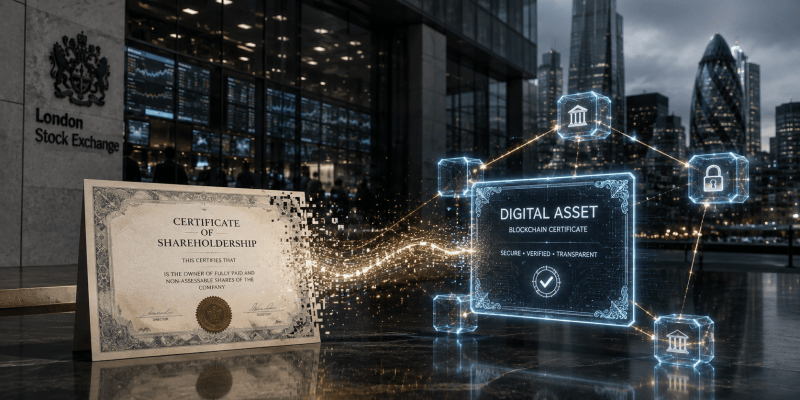
The London Stock Exchange Group (LSEG) has announced plans to introduce tokenized versions of UK-listed shares through a partnership with Payward, the parent company of crypto exchange Kraken. The initiative could bring blockchain-based settlement and around-the-clock trading closer to mainstream equity markets.
LSEG Moves Deeper Into Blockchain-Based Markets
LSEG plans to represent shares in UK-listed companies as blockchain-based tokens while maintaining the shareholder rights and governance protections associated with conventional equities. The tokenized assets, known as xStocks, are expected to be listed on LSE 24, the exchange group’s planned 24-hour trading platform, in 2027, subject to regulatory approval.
The development is significant because it puts one of the world’s major traditional exchange operators directly into the tokenization market.
Tokenized securities have been gaining attention as financial institutions explore whether blockchain infrastructure can make markets more efficient. Unlike cryptocurrencies, tokenized shares are designed to represent ownership in conventional securities while using blockchain technology for elements such as trading and settlement.
The potential benefit is straightforward: markets that currently operate within fixed trading hours could eventually become accessible around the clock.
Crypto Infrastructure Meets Traditional Finance
LSEG’s partnership with Payward adds another important layer to the announcement.
Kraken has already built infrastructure around digital assets, while LSEG operates one of the world’s major regulated securities markets. Bringing the two areas together reflects how the boundaries between traditional finance and crypto infrastructure continue to narrow.
The exchange group said the tokenized shares would preserve the shareholder rights and protections that underpin regulated markets. That distinction is important because tokenization has also attracted criticism from traditional market organizations concerned about investor protection and market integrity.
The idea isn’t entirely new. Robinhood has launched tokenized stocks in Europe, while Coinbase has also been developing its own tokenized-equity offering. LSEG’s involvement, however, gives the trend a different level of institutional significance.
Will Tokenization Change How Stocks Trade?
The technology could eventually make it possible for investors around the world to trade certain UK-listed assets outside traditional market hours and potentially settle transactions more quickly.
But there is still a considerable distance between that possibility and widespread adoption.
Regulatory approval remains necessary, and tokenized securities have to fit within existing rules governing ownership, custody, settlement and investor protection. The technology also needs to prove that it offers meaningful advantages over increasingly efficient traditional market infrastructure.
For LSEG, the move is less about turning the stock market into a crypto exchange and more about experimenting with blockchain as another layer of financial-market infrastructure.
If tokenized shares can preserve the protections of traditional securities while adding faster settlement and greater accessibility, they could become an important bridge between the crypto industry and conventional capital markets.
The next major test will come when LSE 24 and the proposed xStocks infrastructure move closer to launch in 2027. For now, LSEG’s partnership with Kraken’s parent company is another clear sign that blockchain technology is being tested not just around financial assets, but inside the architecture of regulated markets themselves.













Comments