
 By
By 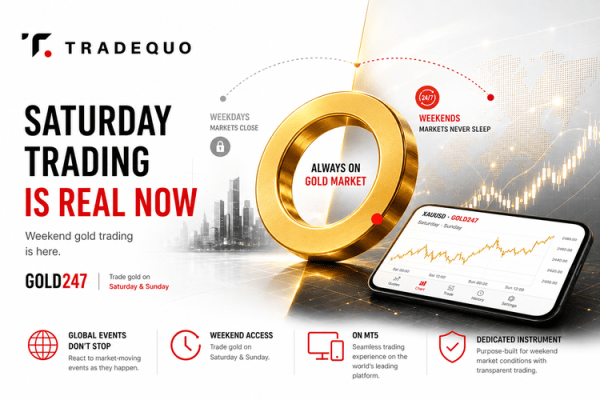
For decades, gold has been one of the world’s most important financial assets. It serves simultaneously as a reserve asset for central banks, a portfolio diversifier for institutional investors, a hedge against inflation and currency volatility, and an active trade for millions of market participants around the world. Yet despite its global significance, access to gold remains largely governed by trading schedules established long before the era of real-time news, digital assets, and twenty-four-hour markets.
That disconnect is becoming increasingly difficult to ignore. The debate has gained momentum following the launch of GOLD247 by TradeQuo, a product that allows clients to participate in weekend gold trading. Initiative itself represents a broker-level development, but it also reflects a broader market question: as gold becomes increasingly important to investors, institutions and even the technology sector, should access to the metal trading still be constrained by traditional market hours?
The question arrives at a remarkable moment for the precious metal. Gold gained more than 65% within a twelve-month period, registered 53 all-time highs, closed near $4,339 per ounce, and later advanced to $5,594 by January 2026. At the same time, World Gold Council data showed total gold demand reached a record of 4,974 tons during 2024, supported by 1,180 tons of investment demand and 1,045 tons of central-bank purchases.
Gold’s Demand Story May Still Be in Its Early Stages
Despite record prices and sustained institutional interest, many analysts argue that gold remains surprisingly under-owned. One widely used way of measuring investor participation compares the value of gold held through major exchange-traded funds with the value of broader equity markets. According to recent analysis published on Investing.com, major U.S. gold ETFs including SPDR Gold Shares (GLD), iShares Gold Trust (IAU) and SPDR Gold MiniShares (GLDM) collectively held approximately $219 billion worth of gold.
By comparison, the S&P 500’s total market capitalization exceeded $66 trillion. That places gold allocations at roughly one-third of one percent of equity market value. Many market participants have noticed an apparent contradiction.
Despite a historic rally and strong institutional demand, the metal remains a relatively small component of most investment portfolios. For gold bulls, this ratio serves as a powerful indicator of future demand potential. The argument is straightforward.
Gold Demand Possible Move
If institutional and retail investors collectively increased average gold allocations from approximately 0.3% toward 1%, the resulting inflows could represent hundreds of billions of dollars in additional demand. Investors acting in pursuit of diversification may not need to make dramatic allocation changes for gold demand to rise substantially. In this framework, gold bullish cases are not based solely on recent price appreciation. Instead, it rests on the belief that vast pools of capital remain structurally underexposed to the asset.
Supporters of the precious metal therefore argue that the story is less about how much gold has already risen and more about how much capital has yet to enter the market. At the institutional level, central banks have emerged as one of the market’s most important structural demand drivers. World Gold Council figures show that central banks purchased 1,045 tons of gold during 2024, extending a trend that has reshaped the gold market over recent years.
Central Banks Remain One of Gold’s Strongest Buyers
Official purchases are tracked through central-bank reserve disclosures, International Monetary Fund reserve reporting, national balance sheets, and direct submissions collected by the World Gold Council. For many market participants, these purchases have become an important indicator because they reflect long-term strategic thinking. Unlike hedge funds or active traders, central banks typically operate on multi-year horizons.
Their purchases are often driven by reserve diversification, geopolitical considerations, currency management, and efforts to reduce dependence on traditional reserve assets. They do not exit positions rapidly but gradually accumulate reserves. Recent market analysis has highlighted that central bank buying strengthened significantly in recent quarters, reaching the strongest levels seen in more than a year.
The significance of this demand lies not only in its scale but also in its consistency. Central-bank purchases tend to be less sensitive to short-term price movements, creating a foundation of demand that can support the market during periods of volatility. For investors, this represents a notable signal.
Artificial Intelligence Is Creating a New Gold Narrative
Another development shaping gold’s future receives far less attention than central bank demand. Most discussions surrounding artificial intelligence focus on software, semiconductors, and cloud computing. Yet the AI revolution is also becoming one of the largest physical infrastructure buildouts nowadays.
Despite decades of technological advancement, engineers continue to rely on gold in applications where reliability is critical. Gold is highly conductive, resistant to corrosion, and capable of maintaining performance under repeated thermal stress. Those characteristics make it valuable in semiconductor packaging, bonding wires, processor contacts, networking equipment, connectors, switches, and high-performance computing infrastructure.
The quantity of gold contained within an individual processor may be measured in milligrams. A single server contains relatively little as well. However, hyperscale AI data centers typically deploy tens of thousands of servers operating continuously. When those facilities are replicated across hundreds of locations worldwide, those seemingly insignificant amounts begin to add up.
AI Boom Generates Secondary Gold Demand
The demand through supporting infrastructure for AI data centers is built gradually for now. Those require power-distribution networks, electrical switching systems, advanced networking hardware, fiber-optic communications equipment, and transmission systems. Gold appears throughout much of that infrastructure. At the same time, major technology companies are investing billions of dollars in new AI facilities.
As that infrastructure expands, investors are noticing that what appears to be a software revolution is simultaneously a large-scale industrial and construction project requiring enormous amounts of hardware. This dynamic represents a subtle but important shift. For decades, the investment case for gold centered on inflation, monetary policy, geopolitical risk, and reserve management.
Today, analysts increasingly view gold through two different lenses: as a monetary asset and as a strategic material used within the infrastructure supporting the digital economy. As gold’s economic importance expands, investors continue questioning whether traditional access models remain sufficient. The challenge becomes especially apparent when major events occur immediately before weekends.
Markets Move Even When Gold Markets Are Closed
On September 5, 2025, U.S. Nonfarm Payroll data showed that the economy added only 22,000 jobs compared with expectations of 75,000, while unemployment rose to 4.3%. The release triggered a rapid reassessment of growth expectations and monetary policy forecasts. Gold climbed to a fresh all-time high near $3,586 per ounce and later traded around $3,580.
Similar developments occurring outside normal trading hours can leave market participants unable to respond until markets reopen. Supporters of expanded access argue that economic releases, geopolitical developments, central-bank decisions and major policy announcements no longer align neatly with exchange schedules. Information flows continuously, while market access often does not.
For many market participants, accessibility increasingly extends beyond execution alone. The ability to monitor and trade www.TradeQuo.com live gold prices during Sunday and Saturday may appeal to traders seeking greater visibility into weekend price action, particularly during periods of heightened geopolitical or macroeconomic shifts. Advocates of weekend gold trading frequently point to digital assets as evidence that twenty-four hours of participation is possible.
What Crypto Markets Have Revealed About Investor Expectations
Cryptocurrency markets operate continuously, allowing investors to react immediately to new information. Large transactions and macroeconomic surprises are absorbed in real time without waiting for markets to reopen. Unlike gold, crypto tokens and crypto currencies can be traded throughout weekends and holidays.
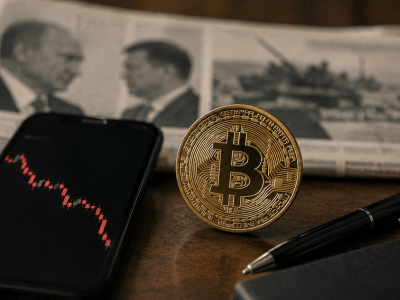
However, recent cryptocurrency market activity also demonstrates an important distinction. Analysis of Bitcoin’s decline below $63,000 concluded that uninterrupted accessibility alone does not create demand. The lesson is relevant for gold.
Accessibility can improve flexibility, risk management, and participation. Yet long-term price performance still depends on underlying demand, capital flows, and investor conviction. Twenty-four-hour trading is not a substitute for strong fundamentals.
Understanding the Risks to Gold Demand
The concern for investors is not simply access, but access combined with liquidity, participation, and effective price discovery. Digital assets have fundamentally changed investor expectations around market availability, particularly among a generation of traders accustomed to uninterrupted market access. Higher real interest rates can reduce the appeal of non-yielding assets such as gold by increasing the attractiveness of government bonds and other income-generating investments.
A strengthening U.S. dollar can also pressure gold prices because the metal is generally priced in dollars globally. Investment demand is another variable. While low allocations suggest room for future inflows, there is no guarantee investors will increase exposure.
Some capital may continue flowing into equities, private markets, or digital assets instead. Technological demand also carries uncertainties. Although AI infrastructure is expanding rapidly, efficiency improvements could reduce material intensity over time.
Manufactures, Central Banks & Broader Accessibility
Manufacturers continuously seek ways to lower production costs and reduce dependence on expensive inputs. Industrial demand growth could slow unless the pace of infrastructure deployment continues to outpace those efficiency gains. Central banks’ demand presents another consideration.
While purchases remain massive, they are ultimately policy decisions rather than permanent market constants. Economic pressures, reserve-management changes or shifts in geopolitical priorities could affect future buying activity. However, seeing gold as a safe asset of hedging against inflation will unlikely change for another decade or two.
TradeQuo’s GOLD247 reflects a broader evolution in market structure. According to the company, GOLD247 operates as a separate symbol with dedicated pricing mechanisms during periods when major gold markets are closed. The product was designed so that traders can monitor weekend price action, manage exposure, and participate in the market through MT5 outside traditional trading hours.
How TradeQuo Offers GOLD247 Trading from Tech Point?
GOLD247 functions as a separate trading instrument specifically designed for periods when major gold exchanges are closed. According to TradeQuo, the product operates through its own dedicated symbol and proprietary pricing framework, allowing traders to monitor and react to weekend market developments without waiting for the reopening of conventional gold trading sessions. The structure is important because GOLD247 is not simply a 24-hour version of XAU/USD.
While both instruments are linked to gold, they operate independently. XAU/USD derives pricing from the global spot-gold market during regular trading hours, whereas GOLD247 uses separate pricing sources and liquidity arrangements during weekends. As a result, the two instruments should be viewed as related rather than identical.
The relationship is similar to how an after-hours market functions alongside a primary exchange. Both reflect expectations about the same underlying asset, but price formation can differ because each market relies on a different pool of participants and liquidity providers. TradeQuo states that GOLD247 maintains a minimum trade size of 0.01 lots, allowing traders to apply the same position-sizing techniques they use in traditional gold trading.
GOLD247 Price Same with XAU/USD Price?
GOLD247 remains fully accessible during weekend periods when standard gold markets are unavailable, enabling investors to analyze developments, adjust exposure, and respond to significant market events. Once conventional markets resume, the product shifts into close-only mode. Traders may reduce or fully exit positions but cannot initiate new trades.
This structure was designed to preserve separation between the weekend market and the standard XAU/USD environment while still allowing participants to manage risk as global liquidity returns. As with any market operating outside primary trading hours, pricing differences can occasionally happen. Because GOLD247 and XAU/USD draw information from different pricing sources, temporary variations may occur between the two instruments.
Such differences are generally considered a normal feature of separate liquidity environments, in much the same way as prices may vary between futures, spot markets or after-hours trading venues. For many market participants, accessibility increasingly extends beyond execution alone. The ability to monitor live gold prices after hours may appeal to traders seeking greater visibility into weekend price action. Viewed through that lens, GOLD247 represents less an attempt to replace traditional gold trading than an effort to address a gap between continuously evolving global events and the market schedules through which investors have traditionally accessed gold.
GOLD247 – What Does It Mean for Brokerage Industry?
Historically, brokers competed primarily on spreads and commissions. Now, accessibility itself may become a competitive differentiator and a new area of business innovation within the brokerage industry. Whether weekend gold trading ultimately becomes standard practice is a big question.
With central banks continuing to accumulate gold, investors remaining relatively under allocated, AI infrastructure creating new sources of demand and financial markets operating in an increasingly continuous information environment, the debate surrounding when investors should be able to access gold appears likely to intensify. The conversation is no longer simply about the gold price. It is increasingly about gold’s growing role in the global economy, the changing nature of investor expectations and whether access to one of the world’s most important assets should continue to be limited by the calendar.













Comments