
 By
By 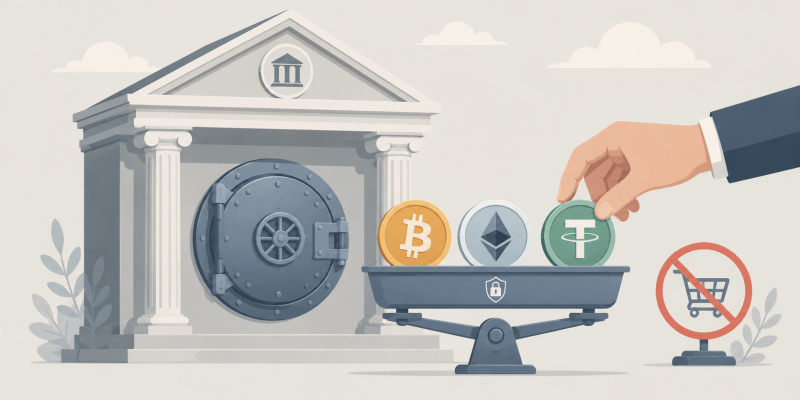
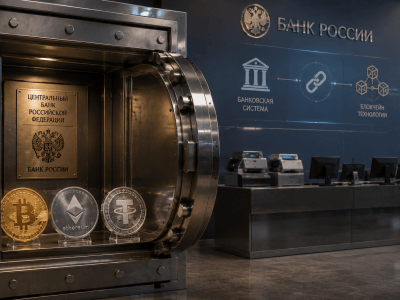
Sberbank, Russia’s largest and majority state-owned bank, says it plans to accept Bitcoin, Ether, and Tether’s USDT as collateral for ordinary loans. A senior executive, deputy chairman Anatoly Popov, laid out the plan in an interview with state agency TASS, timed to a new set of Russian crypto rules that take effect on September 1. The headline is eye-catching, but the detail underneath it is where the meaning sits: Russia is embracing crypto as an asset, not as money.
That distinction matters more than it sounds. Under the new framework, signed into law by President Putin in August, you can pledge Bitcoin to a bank as security for a loan, but you still cannot use it to buy anything inside Russia. Paying for goods and services with crypto remains banned. So Sberbank is not treating these coins as currency; it is treating them as property, the way a bank might already accept shares or gold as collateral. Borrowers get liquidity without having to sell their holdings, and the bank gets a claim it can seize if the loan sours.
A plan, not yet a product
It is worth being clear about how early this is. Sberbank intends to start with Bitcoin and add Ether and USDT only after Russia’s central bank clears each for regulated public trading. No launch date, interest rate, loan-to-value ratio, or minimum has been disclosed. What exists so far is a single pilot: a corporate loan issued last December to a crypto-mining company, secured by the coins it had mined and held in Sberbank’s own custody. Everything beyond that is contingent on regulators who have not finished writing the rules.
There is also a practical wrinkle the announcement glides over. If a borrower defaults, the bank has to sell the pledged crypto to recover its money, in a country where using crypto is otherwise restricted and which sits under heavy Western sanctions. Add the volatility, Bitcoin can swing violently while USDT barely moves, and the risk management is not trivial. A stablecoin needs only a thin cushion; Bitcoin needs a deep one.
Why the USDT part stands out
Of the three assets, Tether’s dollar-pegged stablecoin is the most striking inclusion. Here is a state-controlled Russian bank, cut off from much of the Western financial system, preparing to hold a privately issued token tied to the very US dollar those sanctions revolve around, all while the country separately develops its own digital ruble. It is a reminder of how thoroughly dollar-linked stablecoins have wormed into global finance, showing up even in places officially trying to move away from the dollar.
Step back, and this fits a worldwide pattern of crypto being pulled into conventional banking rather than left to speculators, from US institutions to, now, Moscow. What makes the Russian version distinctive is how tightly controlled it is: state-supervised, payment-banned, retail-capped, and routed through licensed intermediaries.
So is this a genuine leap for crypto’s place in the financial system, or a carefully fenced-off experiment? For now it is the latter, a plan waiting on regulators, resting on one completed loan. But the direction is unmistakable. Even a sanctioned state bank has decided that Bitcoin, Ether, and a dollar stablecoin are solid enough to lend against. The coins you cannot spend in Russia may soon be the ones you can borrow against there.










Comments