
 By
By 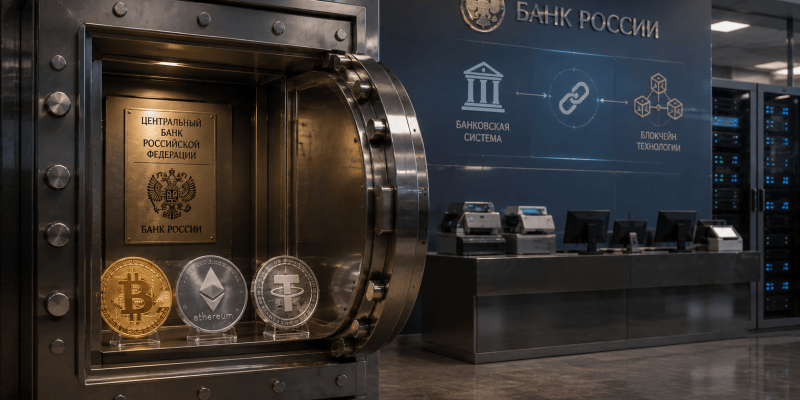
Russia’s new cryptocurrency framework has officially taken effect on September 1, establishing a regulated structure for digital-asset trading and placing Bitcoin, Ethereum and Tether’s USDT at the center of the country’s initial retail crypto market. The rules bring exchanges, brokers and custodians under greater supervision from the Bank of Russia.
The move represents a major shift for Russia, where cryptocurrency activity has increasingly existed alongside a developing regulatory framework rather than within a fully established domestic market.
Bitcoin, Ethereum and USDT Get Priority
Under the new framework, qualified financial infrastructure providers will operate within a regulated environment, while retail access remains restricted.
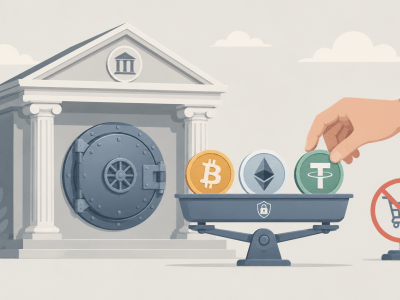
Non-qualified investors can purchase Bitcoin, Ethereum and USDT, subject to annual limits and mandatory knowledge testing. The initial annual purchase limit is reported at 300,000 rubles per licensed intermediary, or roughly $3,700. Investors who qualify for a higher status can potentially access a wider range of digital assets.
The limited asset list is notable.
Russia is not opening the door equally to every cryptocurrency. Instead, the framework initially focuses on assets viewed as sufficiently liquid and established, while broader access to other tokens can involve additional requirements.
Domestic crypto payments remain prohibited, meaning consumers cannot simply use Bitcoin or USDT as an everyday replacement for the ruble when purchasing goods and services inside Russia.
Crypto Moves Closer to Traditional Banking
Perhaps the more consequential development is happening on the institutional side.
Sberbank, Russia’s largest lender, is preparing to expand its crypto-backed lending services. The bank has said it plans to accept Bitcoin, Ethereum and USDT as collateral, although the addition of ETH and USDT remains dependent on regulatory approval for their public circulation.
Sberbank has already tested Bitcoin-backed lending with a corporate client, giving the bank practical experience with digital assets as collateral.
That creates a different role for cryptocurrency. Instead of simply being an asset that investors buy and sell, Bitcoin and potentially Ethereum could become part of conventional credit infrastructure.
Sberbank has also estimated that regulated crypto exchanges could generate as much as 4 trillion rubles, or roughly $46 billion, in trading volume during their first year. That figure represents trading activity rather than new money flowing directly into Bitcoin or Ethereum, an important distinction when assessing the potential market impact.
Regulation Could Reshape Russia’s Crypto Market
The new framework does not amount to unrestricted crypto adoption.
Russia is attempting to draw a clearer line between digital assets as investment instruments and cryptocurrencies as payment methods. That approach allows authorities to bring exchanges and financial intermediaries into a supervised environment while retaining restrictions around everyday crypto payments.
For the crypto industry, the development could nevertheless be significant.
If regulated platforms gain more of the activity currently taking place through offshore exchanges and peer-to-peer markets, Russia could develop a substantially more formal digital-asset market. Banks such as Sberbank could also play a larger role in custody, lending and other crypto-related financial services.
The outcome will depend heavily on how the rules are implemented and how investors respond to the restrictions.
For now, September 1 marks an important transition: Bitcoin, Ethereum and USDT are moving deeper into Russia’s regulated financial system, while the country continues to keep everyday cryptocurrency payments outside the legal mainstream.










Comments