
 By
By 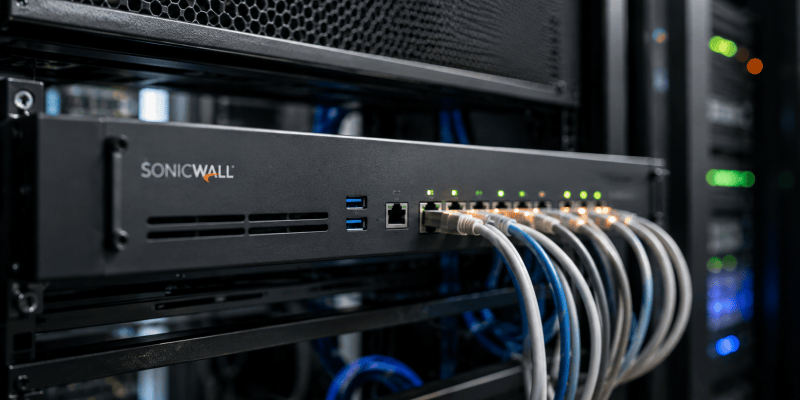
SonicWall is warning that hackers are actively exploiting two new zero-day flaws in its SMA1000 secure remote-access appliances, chaining them together to run their own code on the devices. On its own, that would be a serious alert. What makes it worse is the context: this is the third distinct zero-day attack chain against the same product line in under a year, on top of a state-linked breach and a wave of stolen-credential compromises. SonicWall’s edge appliances have become one of the busiest doors attackers keep walking through.
The technical picture is ugly. The first bug, rated a maximum 10 out of 10, is a pre-authentication flaw in the appliance’s user-facing interface that lets an attacker with no login trick the device into reaching internal systems it should never expose. The second, an OS command-injection flaw in the management console, lets an attacker who has gained admin access run arbitrary commands. Chained together, they add up to remote code execution by someone who started with no credentials at all. The flaws hit the SMA1000 6210, 7210, and 8200v models, though not SonicWall’s firewalls or its separate SMA 100 line.
Small footprint, huge targets
Only about 400 of these appliances are exposed to the internet, which sounds reassuringly modest until you consider who runs them. The SMA1000 is built for scale, deployed by large enterprises, government agencies, and critical-infrastructure operators, the kind of organisations whose networks are worth breaking into. A handful of vulnerable boxes at those targets is worth far more to an attacker than thousands at low-value ones, so the small count should offer no comfort.
That value is exactly why this product keeps getting hit. Late last year, a different SMA1000 zero-day was chained for root access. In the summer, two more were exploited for weeks to plant custom malware, and CISA later confirmed ransomware gangs had joined in. A remote-access gateway sits at the perfect chokepoint, internet-facing and wired straight into the corporate network, and once one falls, everything behind it is in reach.
Why patching alone will not save you
Here is the operational lesson buried in SonicWall’s advisory. Alongside the hotfix, the company tells anyone who finds signs of compromise to re-image the appliance, change every user and admin password, and reset their MFA tokens. That last instruction is telling. An earlier SMA1000 breach reportedly made off with the seeds behind those one-time codes, and stolen MFA seeds keep working long after a patch is applied. In other words, updating the software does not evict an attacker who is already inside, a lesson the industry keeps relearning with edge devices.
A fair caveat: SonicWall has not yet published details of the attacks or a list of indicators to hunt for, and the flaws are not yet on CISA’s must-patch catalogue, so the full scope is still coming into focus. But active exploitation of a CVSS 10 pre-authentication bug is not something to wait on.
So what should an SMA1000 operator do while the details are still thin? Assume the worst and act now: apply the hotfix immediately, and if anything looks off, treat the box as compromised rather than merely vulnerable, and rotate everything. With a vendor whose appliances get targeted this reliably, the safe assumption is not whether attackers are interested, but whether they have already knocked.













Comments