
 By
By 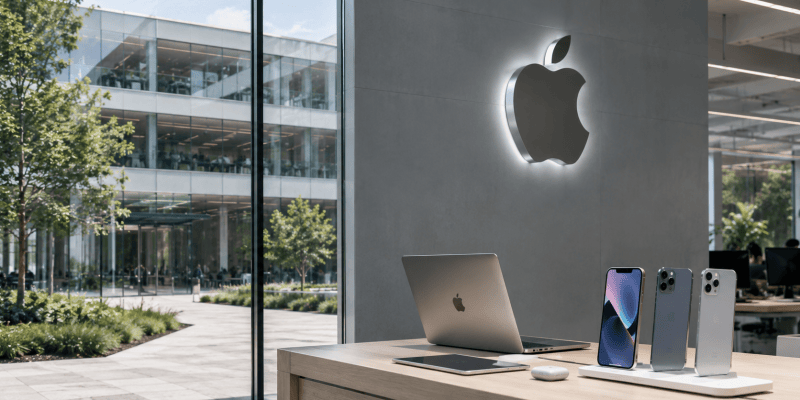
When Tim Cook took over Apple from Steve Jobs in 2011, few expected the quiet operations chief to outshine the founder. Fifteen years later, the numbers make the case for him. Apple has gone from a $350 billion company to one worth more than $4.5 trillion, annual sales have climbed from $108 billion to $416 billion, and profit has more than quadrupled. On September 1, Cook handed the chief executive role to hardware chief John Ternus and became executive chairman. By almost any financial measure, it is the most successful CEO tenure in corporate history. By one measure that increasingly matters, it leaves unfinished business.
Cook’s genius was never Jobs-style product design. It was operations. He turned Apple’s supply chain into the envy of global manufacturing and used that mastery to put cutting-edge devices into billions of hands. His shrewdest move may have been realising that the money did not stop at the sale: with roughly 2.5 billion iPhones in use, Apple built a services machine, from the App Store to subscriptions, that now grows faster than the hardware itself. He also, quietly, turned the Apple Watch and AirPods into a $35 billion business of their own.
The question Cook never fully answered
For all that, critics have a fair point that has dogged Apple for years: it has struggled to say what comes after the iPhone. The misses are real. Apple scrapped its long-running electric-car project in 2024. Its $3,499 Vision Pro headset landed with a thud. And most pressingly, Apple has fallen behind in artificial intelligence, with a promised overhaul of Siri repeatedly delayed while Google, OpenAI, and others set the pace. In the defining technology shift of the moment, the company that once defined consumer tech is playing catch-up.
That is the inheritance Ternus takes on. A 25-year Apple veteran and Cook’s own mentee, he is, like Cook, an engineer rather than a showman. Analysts are blunt that AI is his single biggest test: Apple has to prove that AI can be more than a bolted-on Siri feature, that it can reshape the products themselves. Whether a hardware specialist is the right person to lead a software-and-AI reinvention is the open question hanging over the handover.
A sensible division of labour
There is logic in how Apple has split the roles. Cook is not disappearing; as executive chairman he keeps the job he is best at, managing Apple’s fraught relationships with Washington and Beijing at a moment of tariffs and US-China tension. That matters, because Ternus’s other big task is finishing the delicate shift of manufacturing out of China, with most US-bound iPhones due to be made in India by the end of this year, without wrecking the margins that supply chain was built to protect. Leaving Cook to handle the politics frees Ternus to focus on products and AI.
So does Ternus inherit a company at its peak or one quietly past it? The honest answer is a bit of both, and that is the tension of this transition. Cook leaves Apple richer, larger, and more disciplined than anyone could have imagined, a genuine business masterpiece. He also leaves it needing to prove it can still invent the future rather than just monetise the past. The financial legacy is settled. The next chapter is entirely Ternus’s to write.








Comments